Quick Take
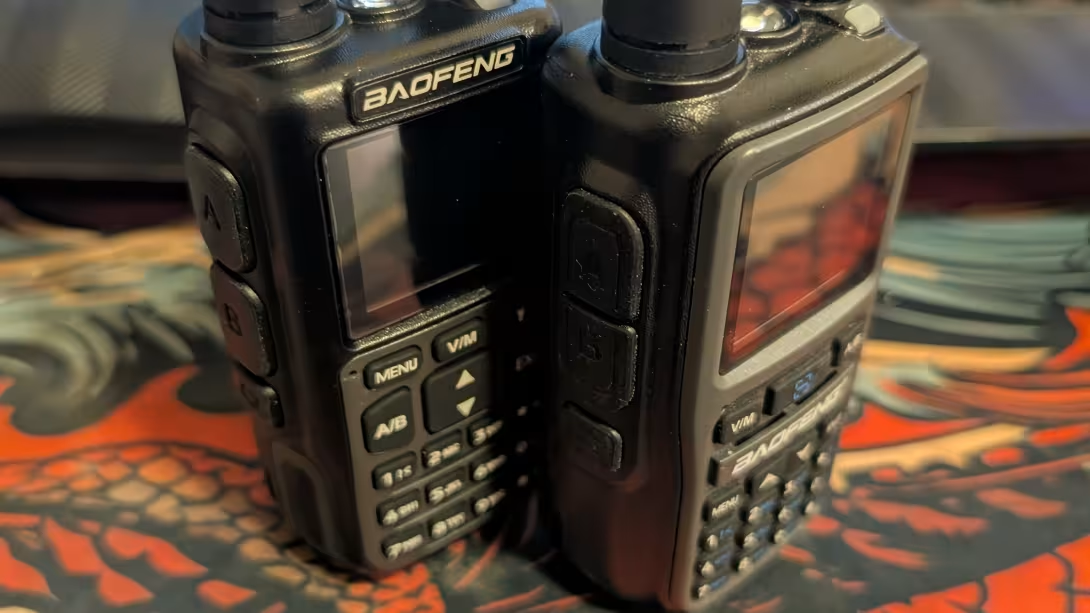
When we heard Baofeng put out an update to one of our favorite radios, the UV-5R mini, we just had to get our hands on it. It supposedly had changed, but has it actually?
Our Initial Comparison
We got our hands on the new Baofeng UV-5R Mini-5 radio and put it side by side with one of our many Baofeng UV-5R mini radios. We'll be testing the radio to see just how different it is in practice. Here's a few initial things to share.
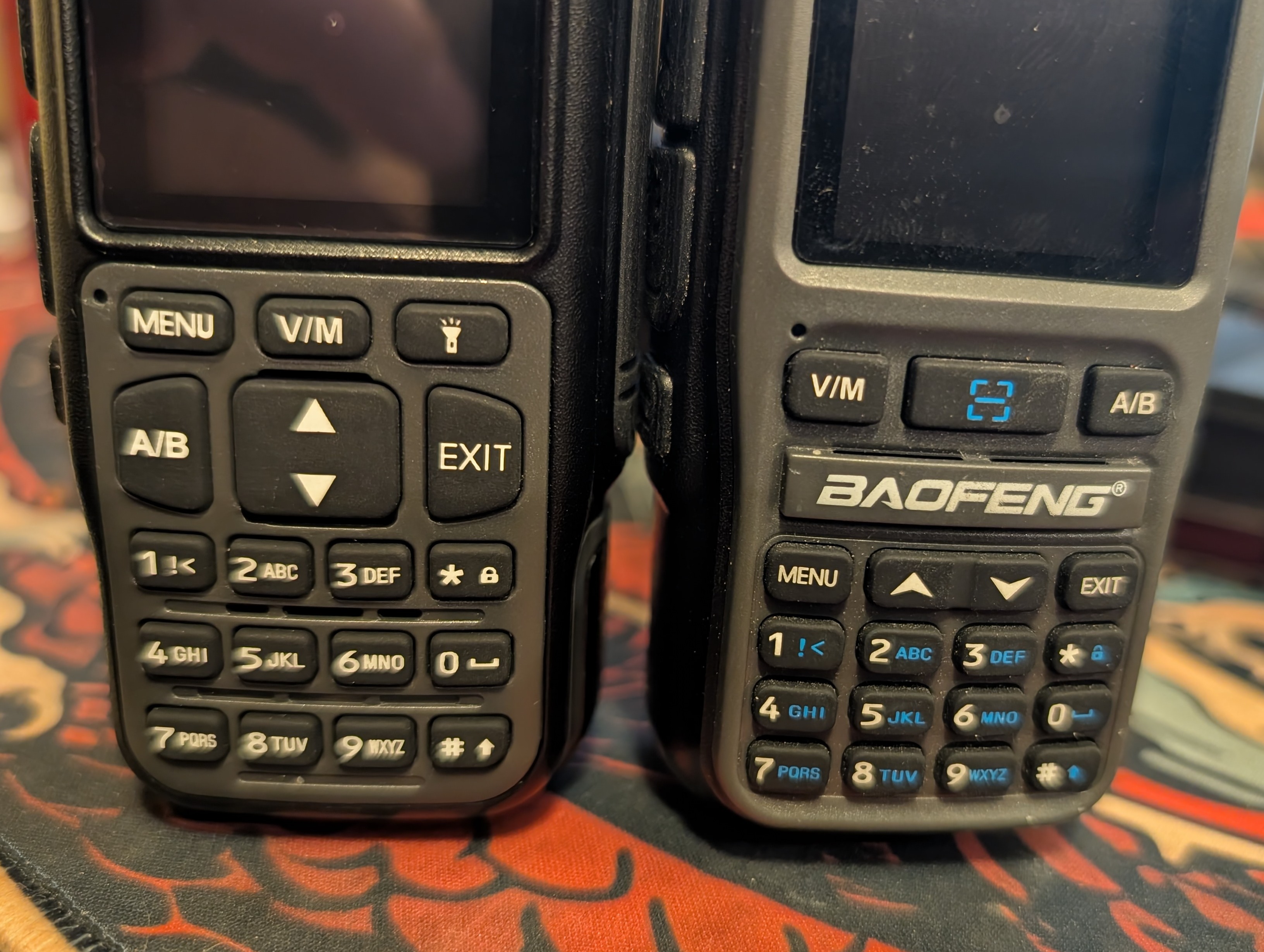
The most obvious difference we can find thus far is the button layout. If you found the previous butons challenging to work with, a few select buttons are now ever so slightly larger and perhaps a bit more intuitive. One of our simple favorites is that the flashlight button isn't so large and prominent, as we found a lot of times we'd bump the large center button when taking the UV-5R mini in and out of holster, turning on the flashlight and burning through batteries. The new offset button is a bit harder to push, which we hope will reduce inadvertent flashlight situations.
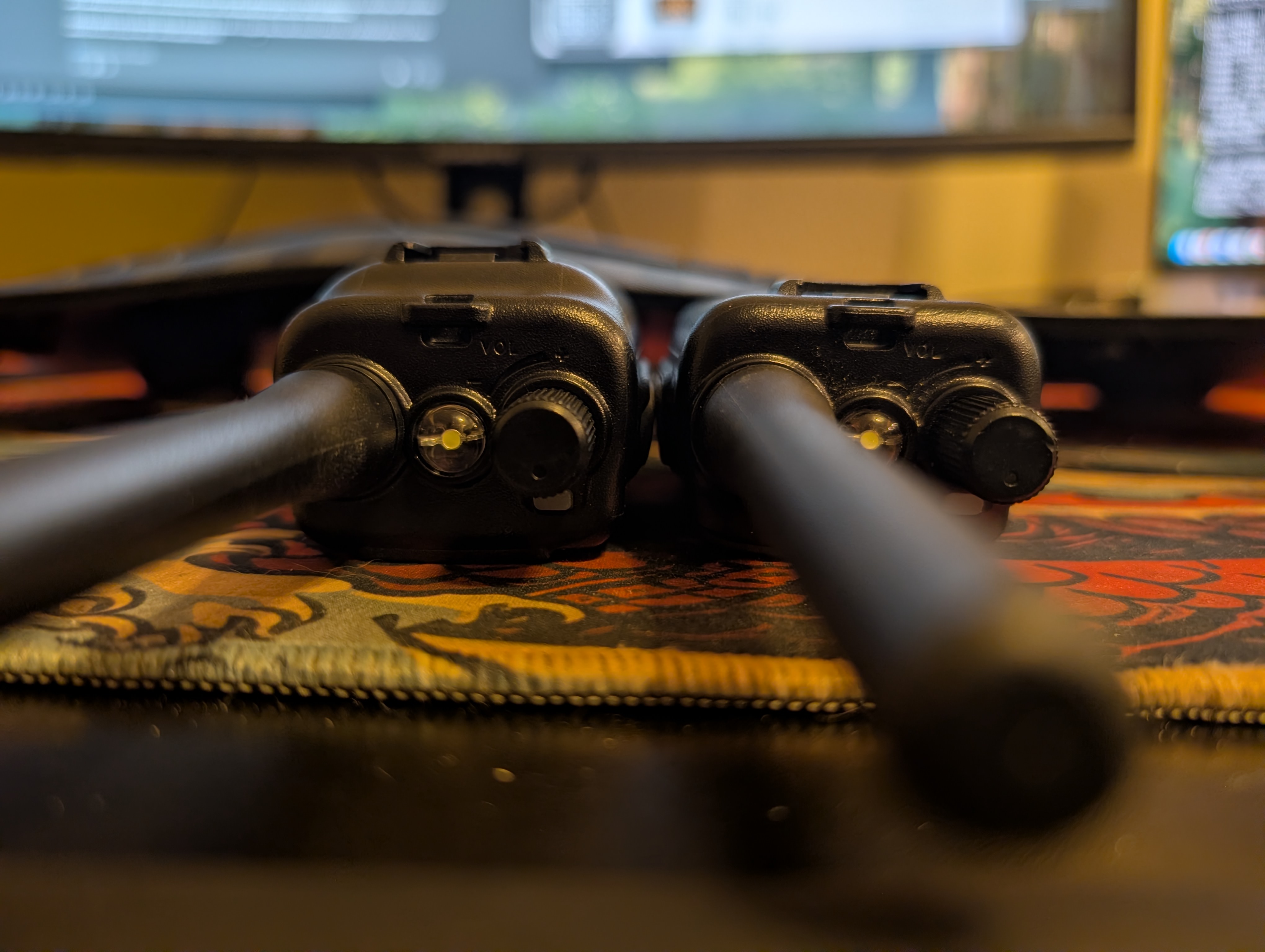
One key thing that's immediately obvious visually and felt in the hand is that the Mini 5 is notably thicker. While perhaps in and of itself the thickness jump isn't massive, percentage wise it's a large increase, and in your hand it's very obvious.
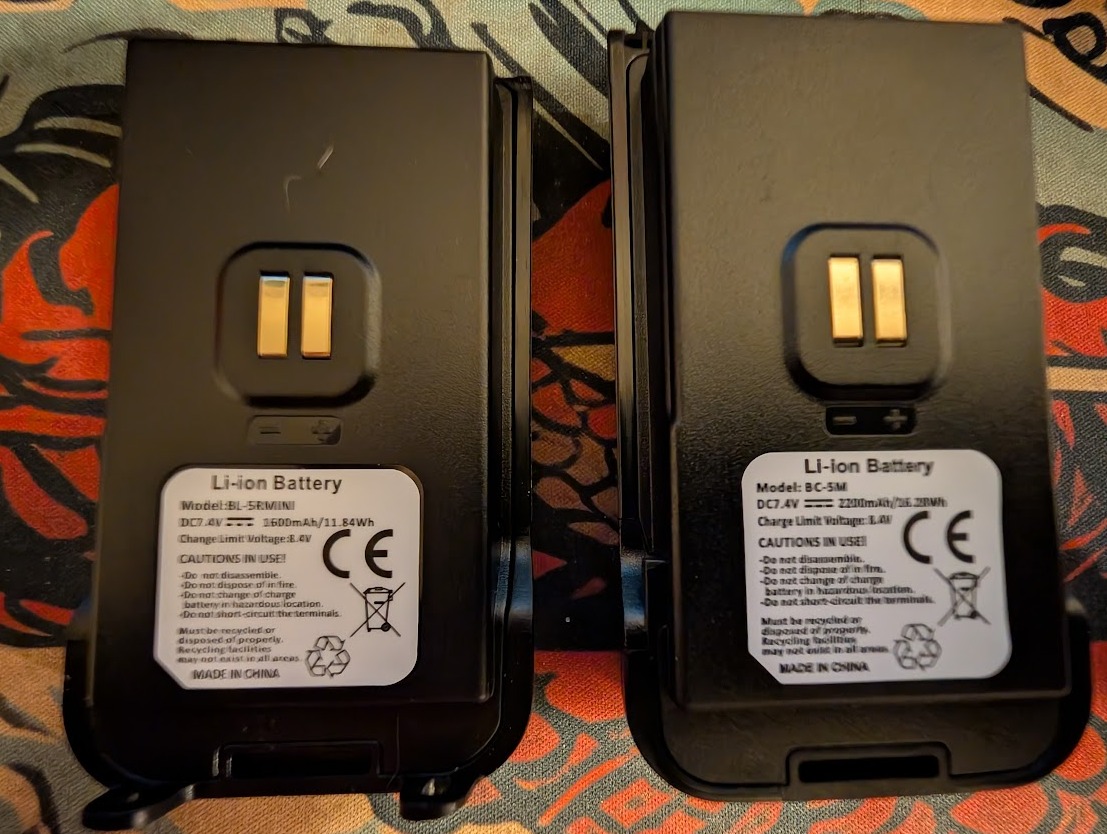
The jump in volume seems to mostly be a transition from a 1600mah battery to a 2200mah battery, which is nice for longer function time in the field... though we're not sure necessary as the battery already did a full ski day out on the hill for us and still had full bars of charge on it. How busy do they thing ham radio operators are???
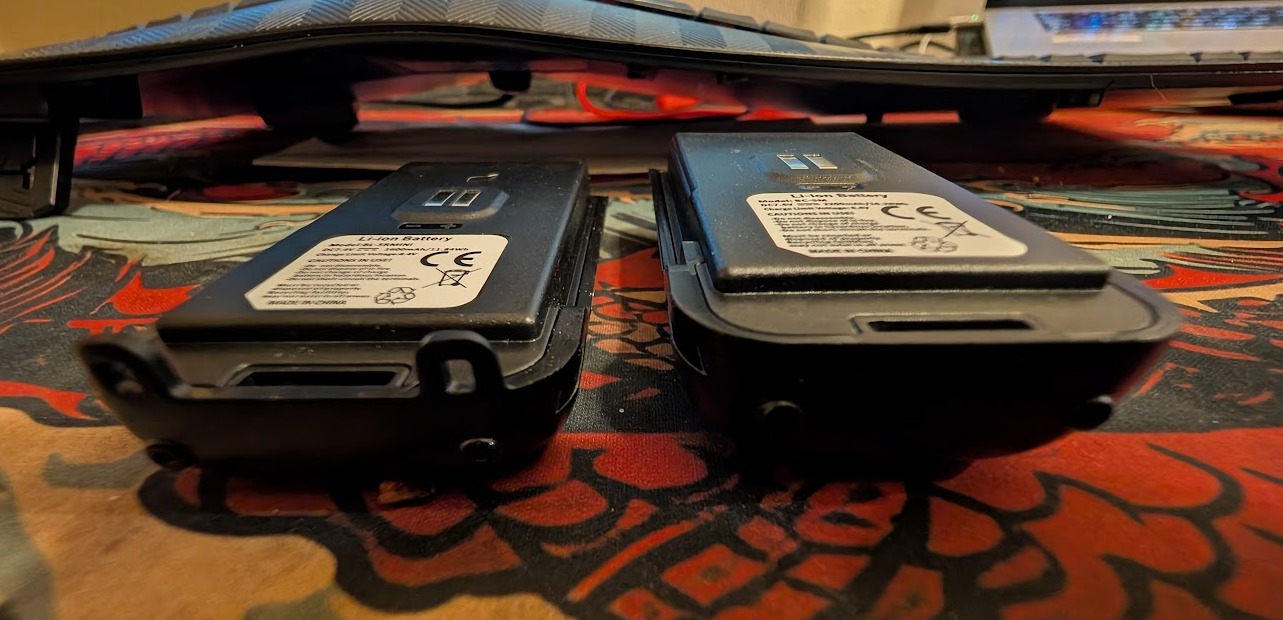
Now maybe you had the same thought we did... what about taking the old battery and putting it in the new radio to get the improved button layout but not the extra girth of the 2200mah battery? Unfortunately for that idea, the battery is indeed different between the two radios. The UV-5R mini has two extra tabs at the bottom for retention, which perhaps if ground off would let it work... but also serve a nice retention purpose on the UV-5R and we'd hate to destroy that out just to move batteries around.
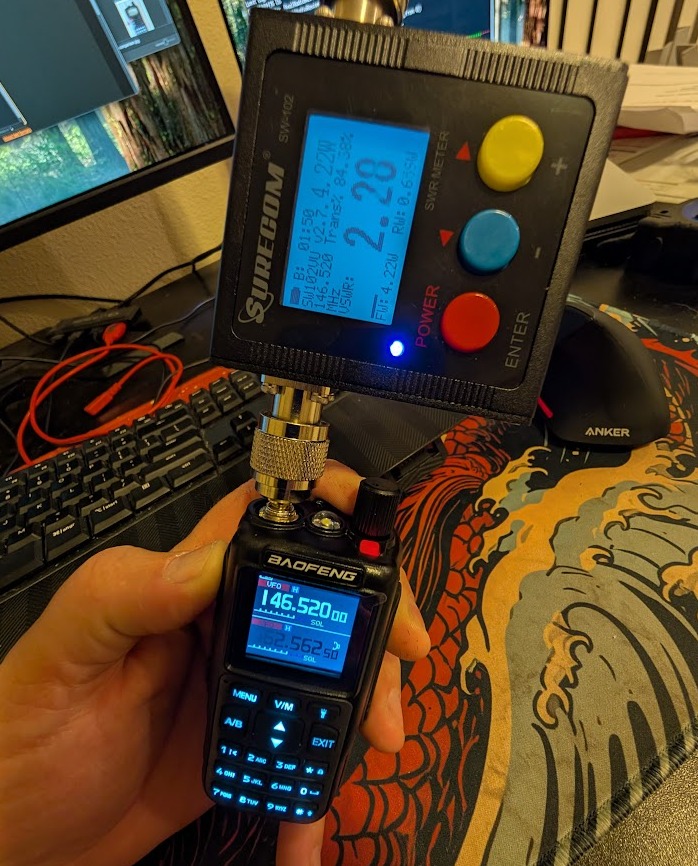
For fun, we decided to test the radio out with our Surecom SW-102. Now we know the SWR reading you get from this isn't always indicative of real world performance on a radio, but there's some details in there folks like, and the wattage output is at least valuable. Here's how the radios compare:
| Frequency | UV-5R Mini | UV-5R Mini 5 |
| National VHF (146.520 MHz) | 4.37w @ 1.75 SWR | 4.22w @ 2.2 SWR |
| National UHF (446.000 MHz) | 5.64 W @ 2 SWR | 5.22w @ 2.5 SWR |
| GMRS CH 1 (462.5625) | 5.64 W @ 2.1 SWR | 4.07w @ 3.7 SWR |
We recognize the above numbers sure seem to make the UV-5R Mini look better, but please keep in mind testing handheld radios this way is prone to a lot of noise. Your body is part of the ground plane supposedly, and good luck holding a radio the exact same way twice, or having it even be the most optimized way to hold a radio. Plus how adding a testing apparatus larger than the radio and longer than the antenna is surely going to add noise.
What we can safely say is, they both deliver on their 5w promise. We doubt the SWR is actually worse on the UV-5R Mini 5.
One of the areas we were hoping for an improvement was in the UI, where nothing change.. Now we should state that the original Baofeng UV-5R mini UI itself was bad... but we were hoping for zones, or banks, or being able to run one channel in a particular zone/bank, and the other in a different zone/bank... all of that capability that is there with the UV-28+ and thus exists in code, but for some reason couldn't be brought over to the UV-5R Mini 5 for some reason.
Bottom Line
The UV-5R Mini 5 is more like a minor version update of the UV-5R than a full update. It's still a solid radio, but it does lose some of that amazing compact form factor we loved, but gains some extra battery capacity and improved button layout along the way. We still don't think you can go wrong with either radio, and they remain favorites around the team here at Real Radio Reviews.