Specs & Ratings
Bottom Line
A solid performing VHF antenna for the budget conscious user.
Pros
- Solid performance accross all of 2m
- Very affordable priced
- Solidly built
Cons
- The claim it can do 70cm (UHF) is a bit of a stretch.
- Definitely not HOA friendly. It definitely isn't an aesthetically pleasing item.
- We got ours second hand so who knows what abuse it endured, but on ours the soldered joints weren't great, so we redid them.
Who This Is For
You want a VHF oriented solid performing antenna for cheap, and you aren't bothered that it looks like it came from Home Depot.
Testing Notes
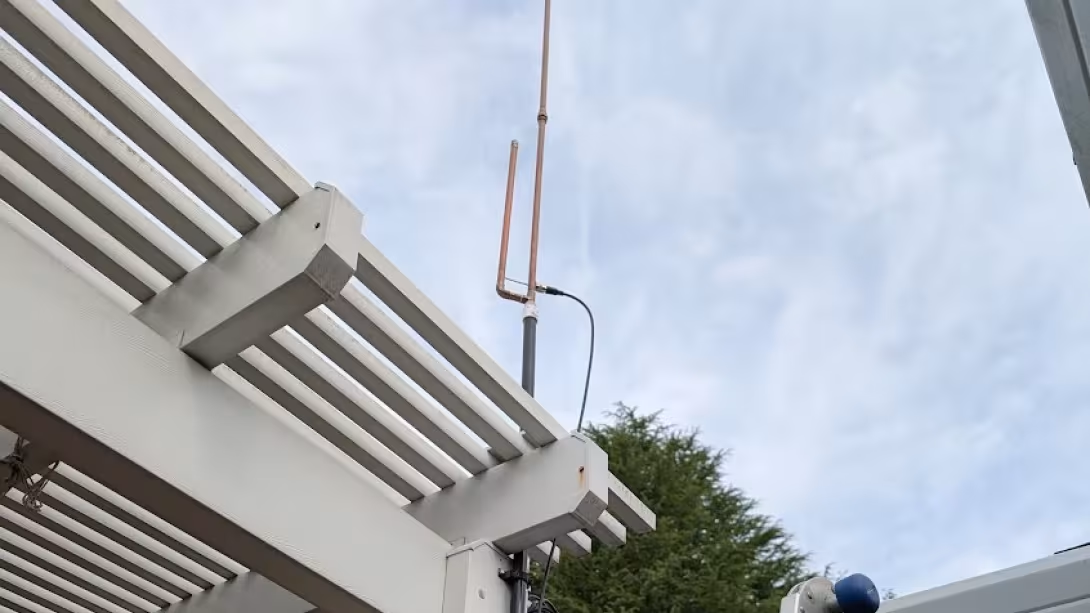
We ran this antenna as our primary antenna for quite a while on our backyard Pergola setup pictured at the top of the article. We placed it decently high above our Pergola in a simple fiberglass extension pole bolted to our roof. It's simple, humble, and honestly about as good as what most folks putting this up on anything are going to do... unless you like putting $50 antennas on top of $1000 towers.
Detailed Review
We picked this antenna up secondhand from a friend. They had bought into all the neighborhood emergency preparedness community stuff going on in their neighborhood, and then gone way deep down the rabbit hole. They got their tech, general and EXTRA license all in one sitting... all before even saying CQ CQ CQ... and then futzed with it all for a bit and moved on as it just wasn't interesting to them. They passed us a VHF mobile setup they'd used at home, a power supply and a few other various bits and pieces, including this antenna.
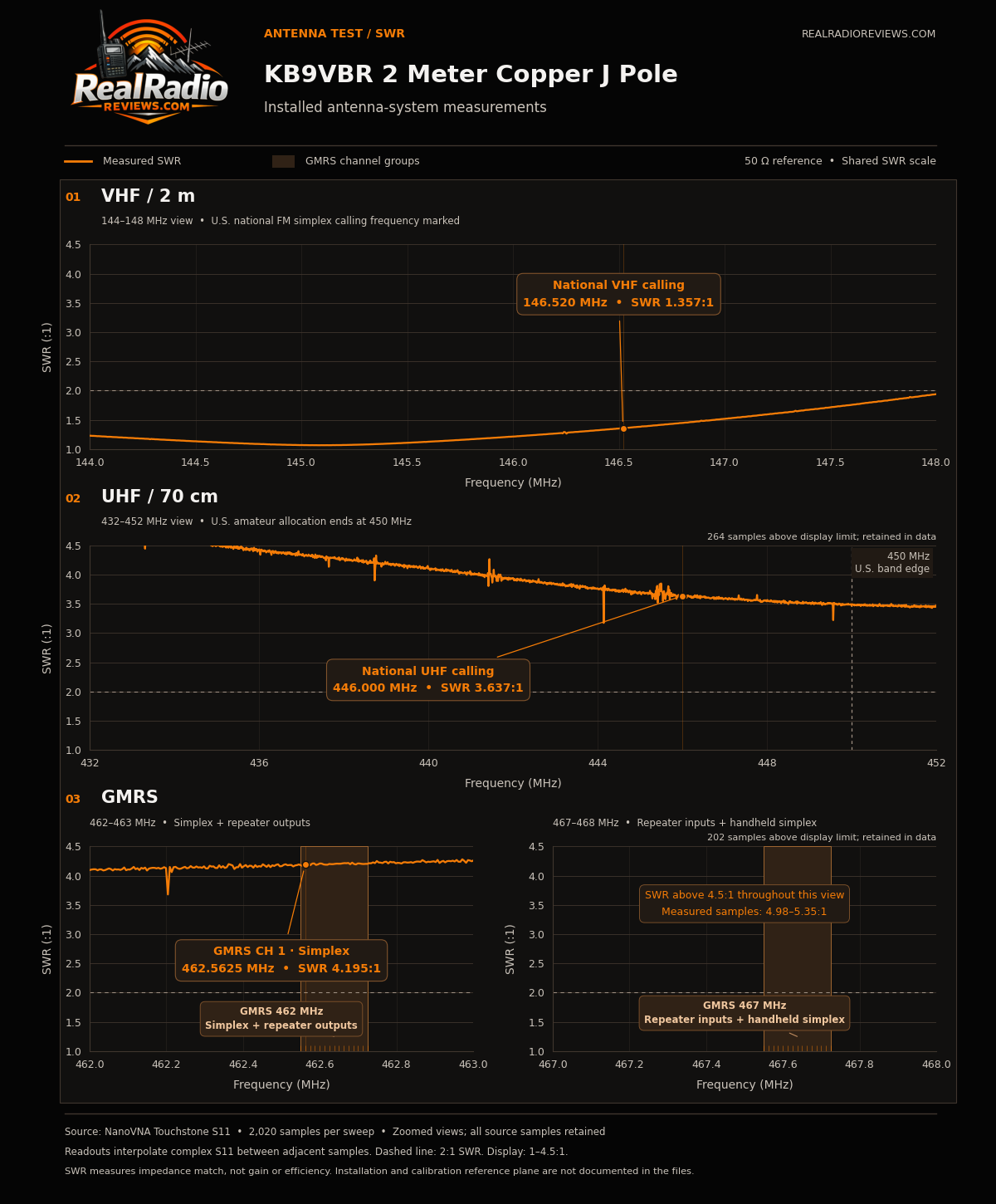
We set this antenna up and used it for our primary base station antenna for a while, which was a bit to our disadvantage since we had a daily traffic net on 440 we'd use it for. Still , it did work! The antenna was indeed exceptional on VHF however, with the data we'll show later demonstrating it's focus on VHF. As advertised, it can do UHF, but it's not terribly good, and on long transmits it put our ICOM 5100 into some sort of protective mode. Too much power reflected down the line perhaps from the mismatched SWR?
We think this antenna combined with a UHF specific antenna through a Comet CF-4160J Duplexer is the ultimate home station VHF/UHF combination. Most dual band antennas are a bit of a compromise somewhere or another... but for a small investment and one extra length of coax you can get two no compromise antennas and combine them into one killer VHF/UHF setup!
Measured SWR
Measuring Device: NanoVNA and the NanoVNASaver app
Frequency Band |
| SWR*** |
|---|---|---|
National VHF (146.520 MHz) |
| 1.357 |
National UHF (446.000 MHz) |
| 3.637 |
GMRS CH 1 (462.5625) |
| 4.195 |
***measuring SWR does not actually reflect performance, but does generally indicate how well matched impedance wise an antenna is around a certain frequency.
Accessories we recommend
You really don't need much if anything for this antenna.
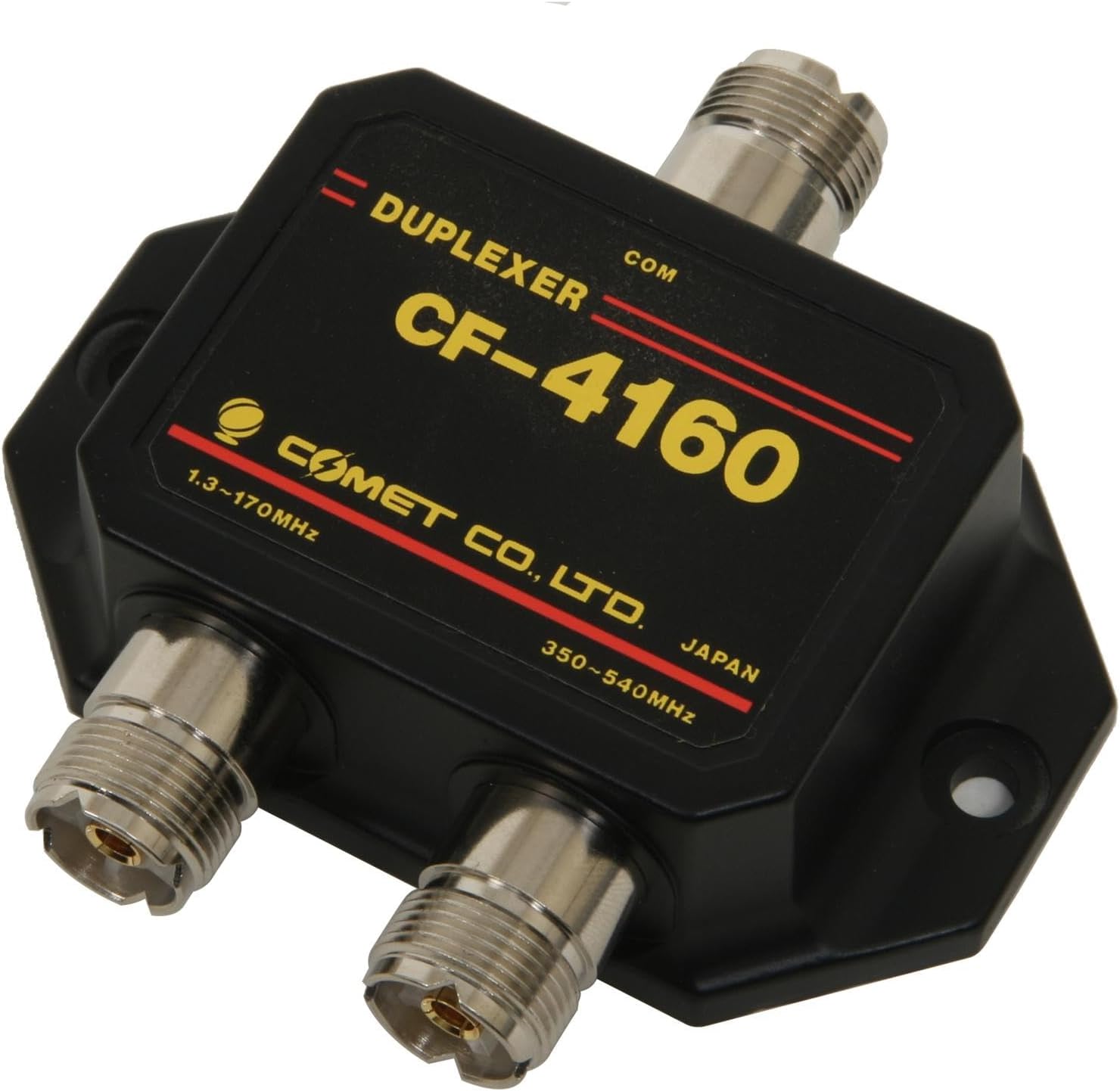
As mentioned above in the article, we think this antenna paired with a UHF specific antenna is the ultimate home combination, and we'll likely build something like that for ourselves soon. We'll be running it through this Comet CF-4160J Duplexer, which is both reasonably priced, has minimal impact on signal quality/strength, and specifically splits in such a way that GMRS is preserved should we want to try and listen in on that.
Final Verdict
Any antenna made in America under $100 you really can't fault. Sure there's some stuff on Temu or other such junk from Amazon, but this one supports a fellow ham, doesn't cost much, and is a proven performer on VHF. We don't see ourselves getting rid of it, and look forward to setting it up with a UHF specific antenna through the Comet Duplexer.