Specs & Ratings
Bottom Line
The Quansheng UV-K1 radio is a boring radio out of the box ... but It's stellar reputation among enthusiasts come from it's ability to accept custom firmware, with many highly refined options available out there. We think there's something to it, though the experience is definitely for the persistant DIYer and not the casual user.
Pros
- Very Compact, between UV-5R Mini and UV-5R Mini 5.
- Ergonomically great feel in hand, our personal preference for a "mini" radio that works good in a size large to extra-large size glove hand.
- Reasonable stock UI and buttons. Better than Yeasu, inferior to Baofeng Mini's, but entirely workable with minimal effort.
- GREAT modified UI experience with F4HWN firmware flash, especially the UI+ version we made.
Cons
- No color screen is a slight bummer, but eh it's cheap.
- Shorter channel name length of 10 characters compared to Baofeng's 12. May not seem like much, but every character helps!
- OEM and out of the box it's just not a great radio. It's decent, but not good and we'd pick the UV-5R mini over this radio before modifications.
- DIY Firmware + Modifications aren't for everybody. The CHIRP warnings alone will scare most folks away. This is for folks not afraid to experiment and are okay with possibly bricking their $40 radio.
Who This Is For
This radio is clearly for the DIY radio enthusiast not afraid to "get their hands dirty" and/or possibly brick a $36 phone. This radio is also definitely in the compact to sub compact radio category, which we assume means active outdoor users will gravitate towards it.
Testing Notes
We picked up our Quansheng UV-K1 direct from amazon. We set it up first with CHIRP and did a bit of mild testing around everyday weekday life. We then flashed the radio and were impressed enough with it that we made it our main ski radio for the season.
Detailed Review
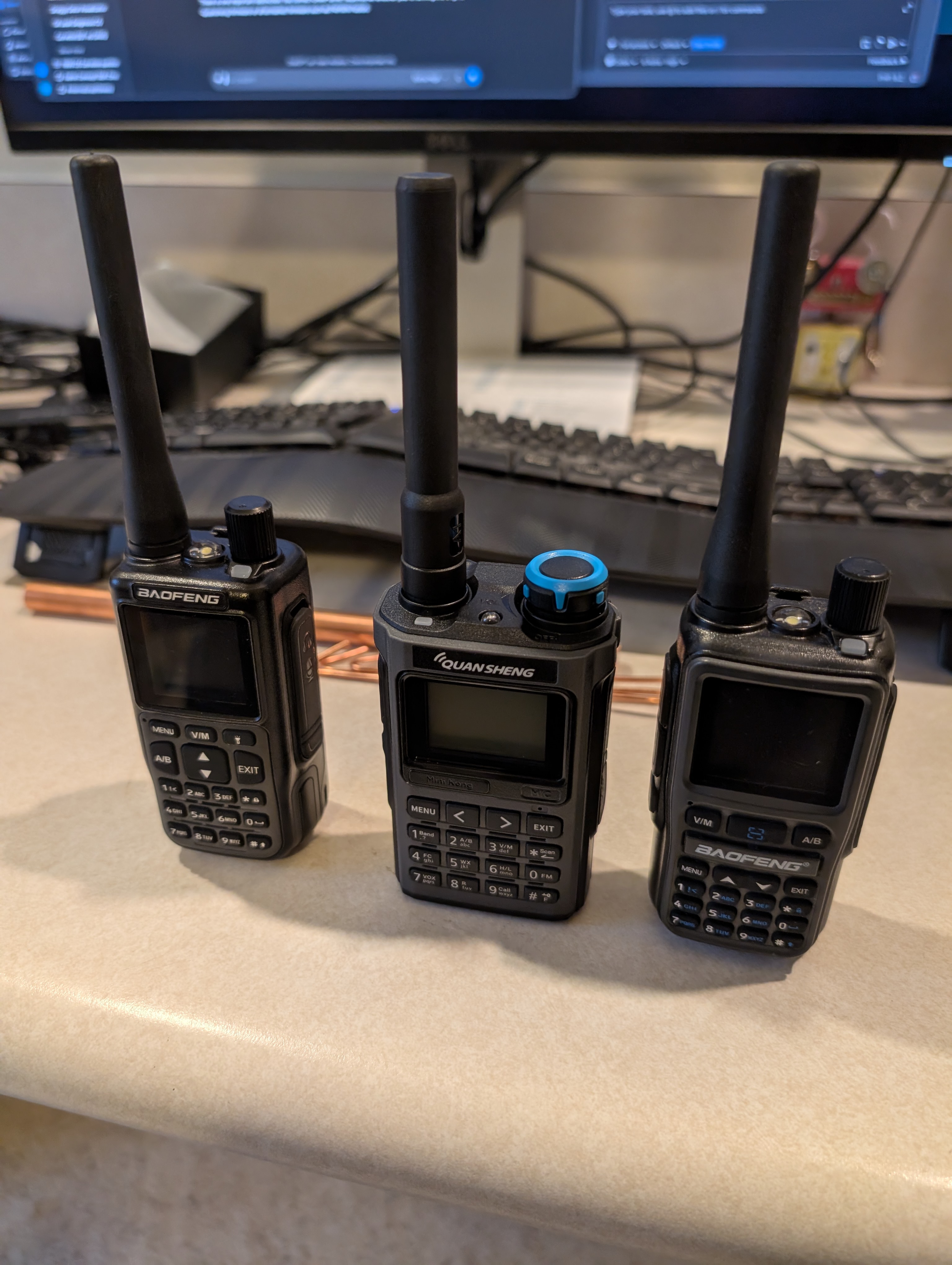
We love compact radios. Operating portable is great, but it's just not realistic to be lugging around a brick with you everywhere you go. From the amazing Baofeng UV-5R mini to the indestructible and submersible Yaesu VX-6R, you can find a radio for whatever you may be up to. For us, we like to take our radios mountain biking, skiing, camping and in general adventuring outdoors. For all of those activities you want the maximum potential for the lowest bulk and weight penalty possible. That's where the UV-5R mini shines, the Yaesu VX-6R shines for durability (but is 20 years old for UI), and the competition that the Quansheng UV-K1 enteres against.
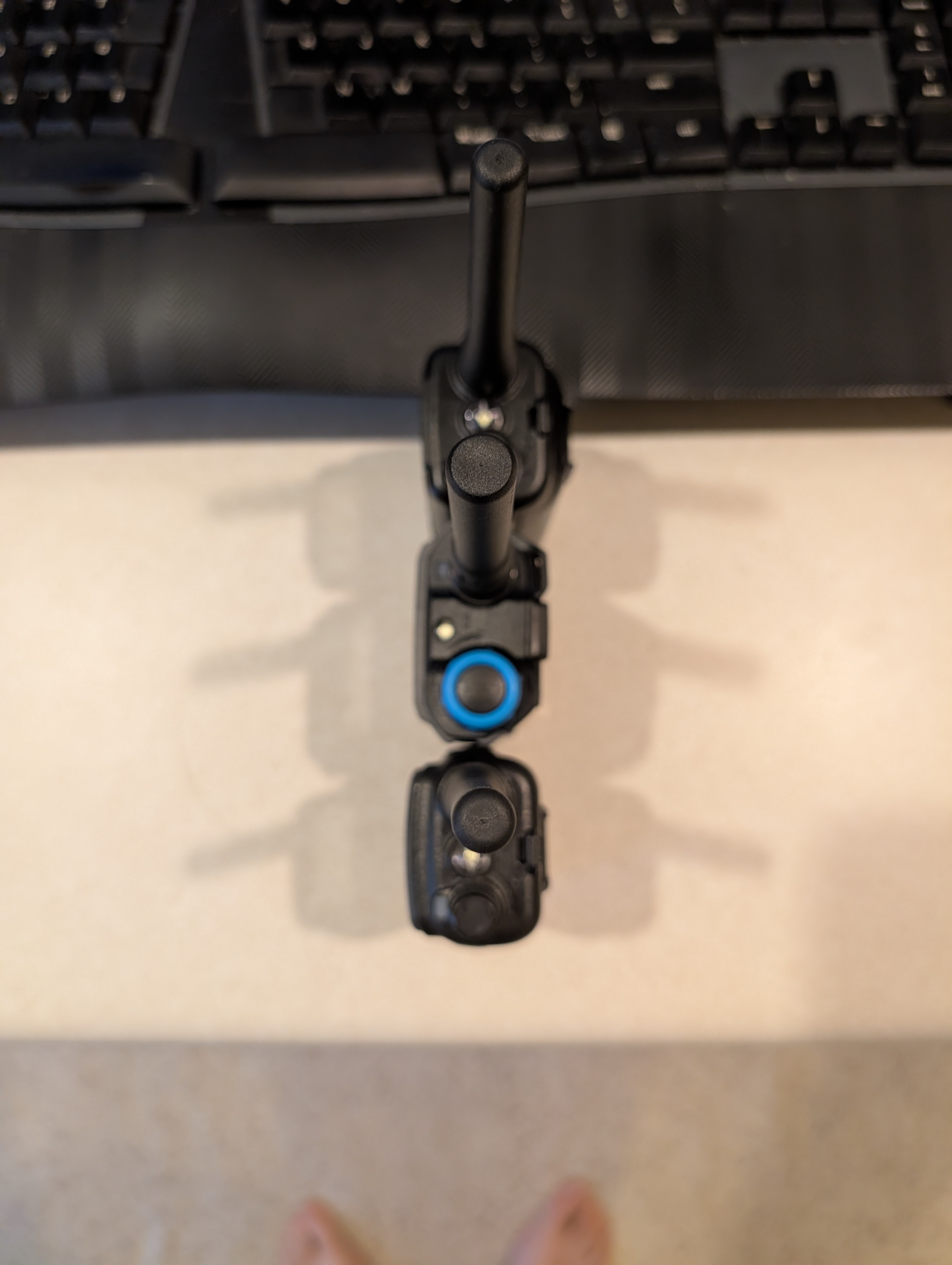
Above you can see a top down view of the Quansheng UV-K1 in the middle. The UV-K1's the same width as the UV-5R Mini, and a bit thinner than the UV-Mini 5, though most of that difference is in the larger battery of the UV Mini 5.
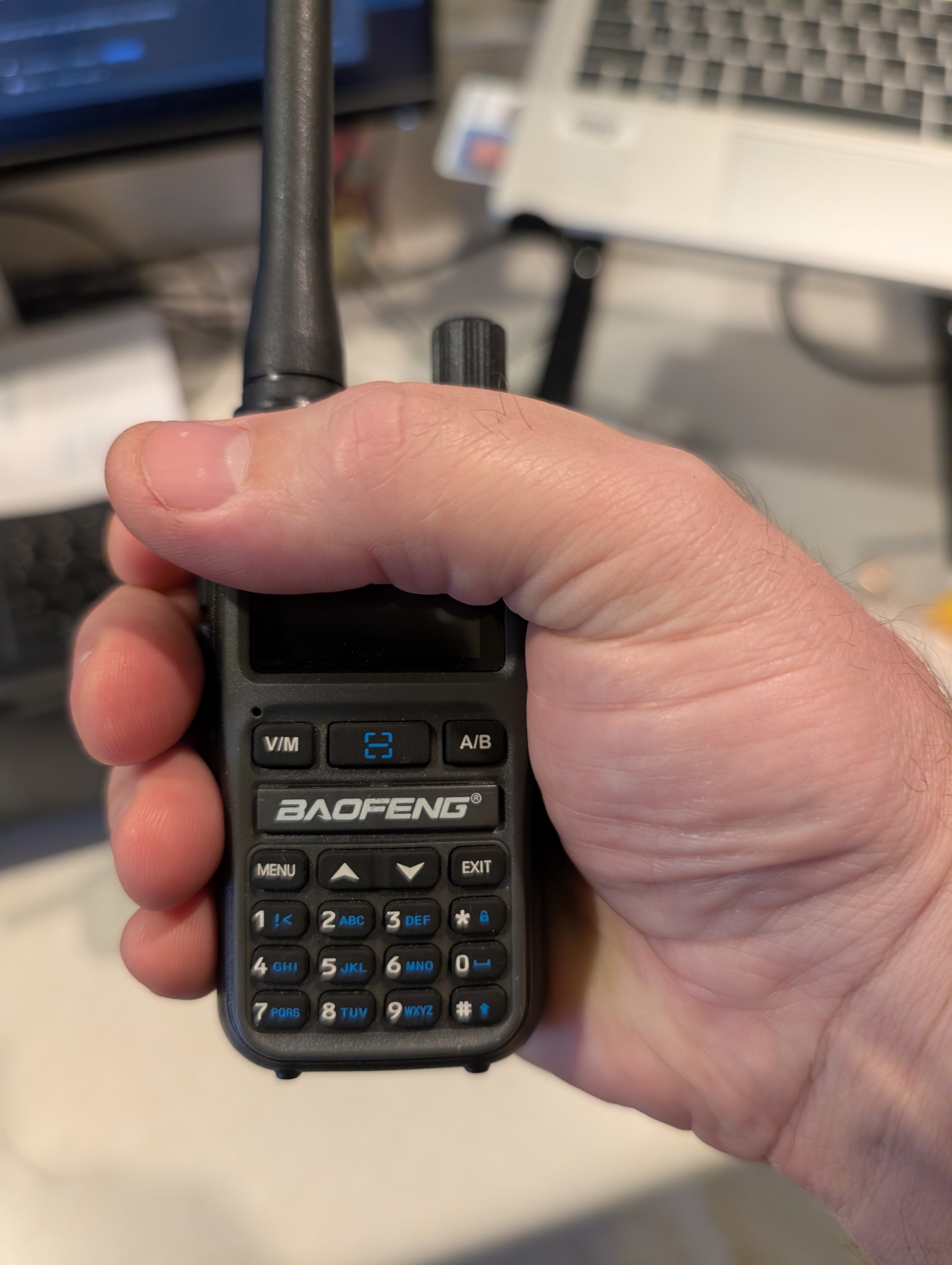
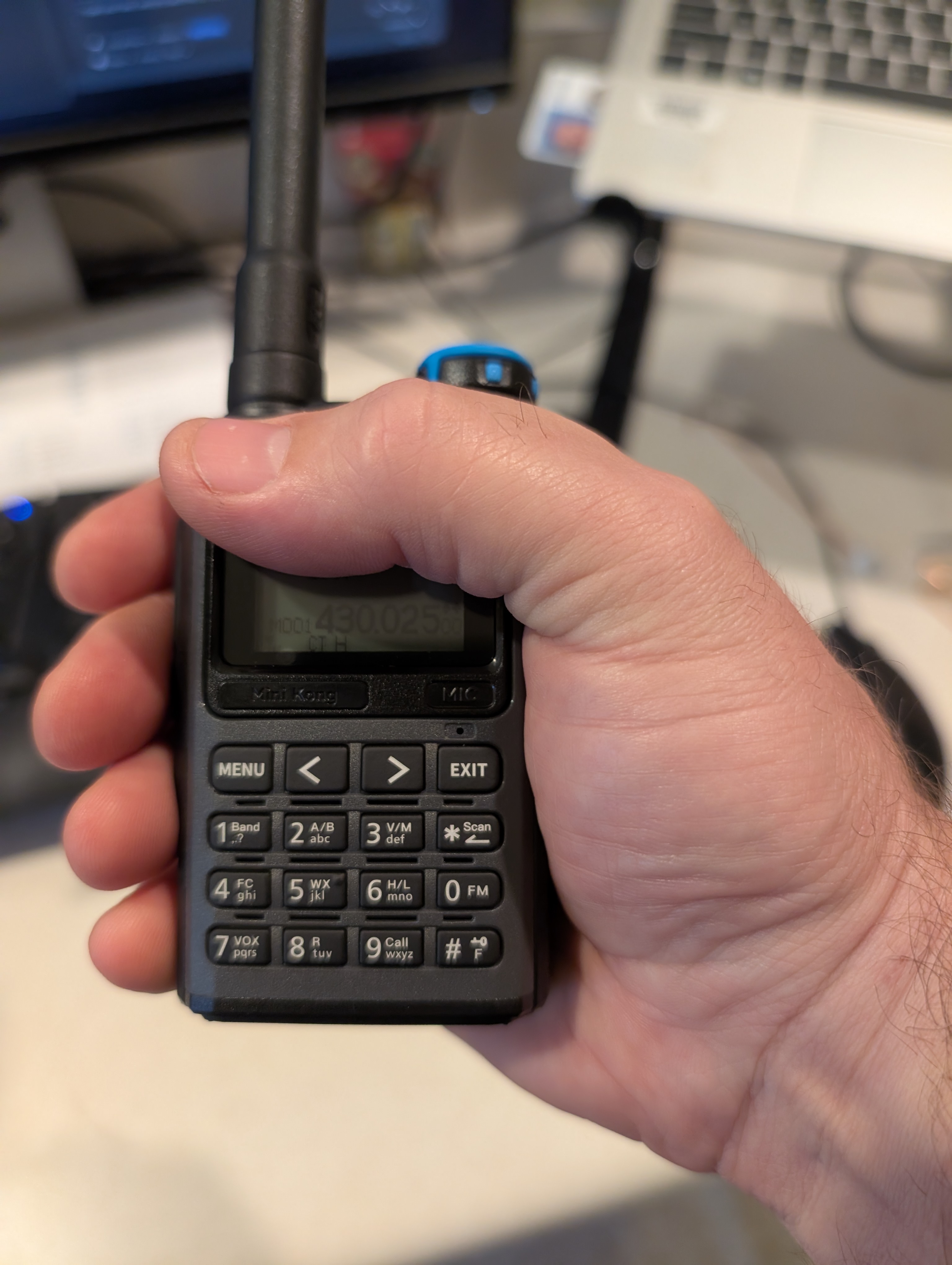
Above are two in hand pictures of the Baofeng UV-5R mini and the Quansheng UV-K1 radio. We personally can't imagine a radio smaller than either of these radios being reasonable to operate, and for many folks the UV-5R mini is too small. We find it reasonably to operate, but the Quansheng UV-K1 on the other hand is about the right compact size for us personally. Your hand size may vary, and for reference our author generally wears a large to extra large glove.
So as far as size goes... the radio competes favorably against the current market offerings. It's not a paper weight though, it's a radio, so let's move on to how it actually worked for us.
How does the Radio Actually Perform? (Un-modified)
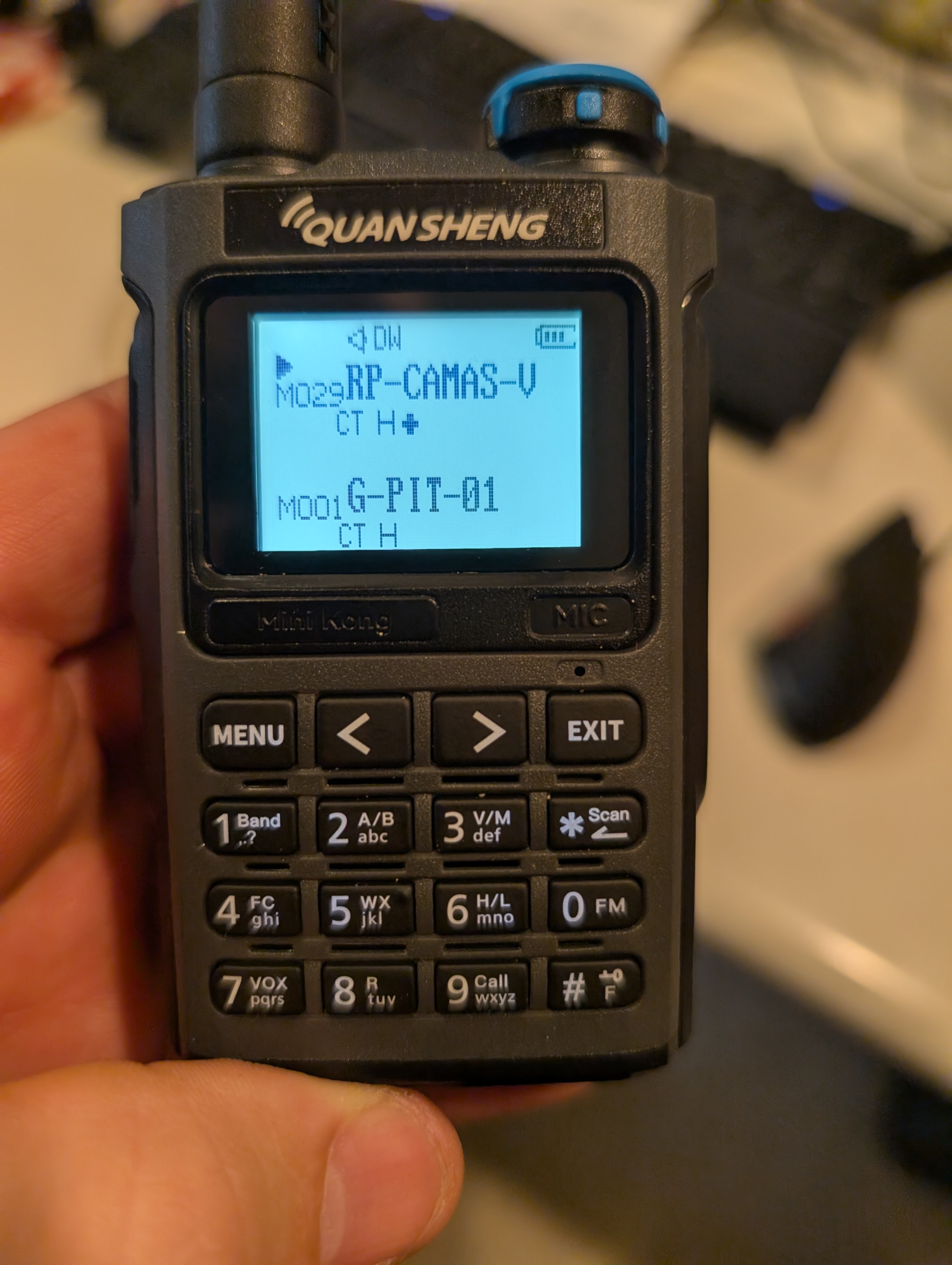
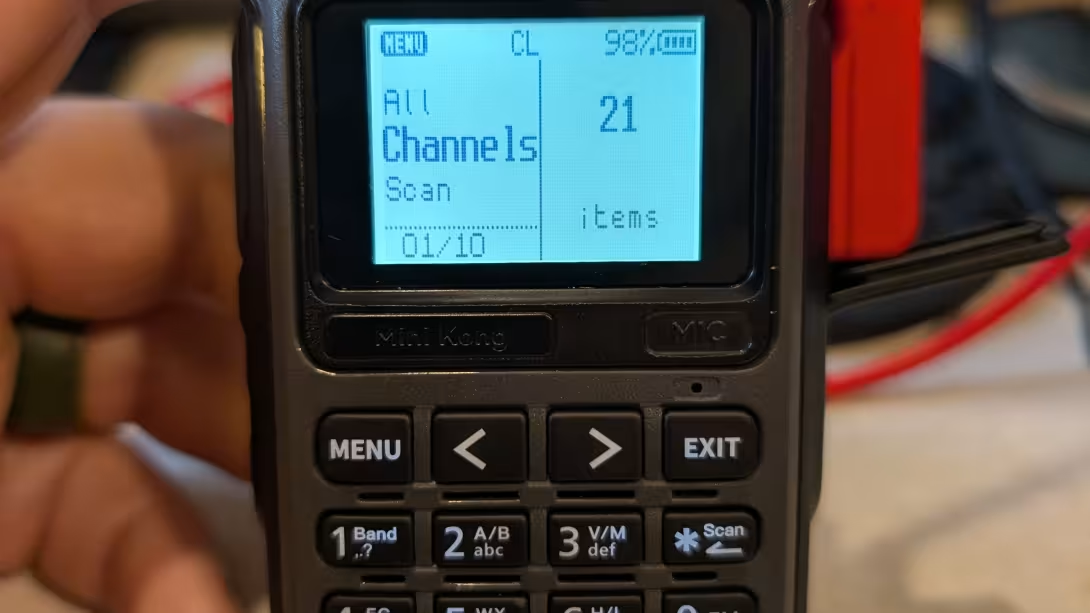
We grabbed our Quansheng UV-K1 and immediately found the UI challenging. Even the simple task of getting dual channels working and displaying just the channel names was a bit of faff. We definitely wouldn't want to be programming in memories by hand on the factory UI, especially in the field! Fortunately this radio is CHIRP programable, and unless you're love punishing your thumbs you're going to program your radio this way as well. So we went right to copying over our channels from our Baofeng UV-5R mini to this radio and... immediately ran into a few downsides of the radio.
First off, the radio is limited with the factory firmware to 200 memory channels. That's about 5x less than the Baofeng UV-5R mini. Now... does this matter? Not really, most folks will be utilizing these radios in rather specific locations, and it seems highly unlikely they'd have 200 repeater near them. Our author is based out of a city of 6 million people with a lot of mountain repeater infrastructure around and definitely doesn't need 200 channels. Still, it's a shortcoming.
The next largest drawback for us was the mediocre UI. That's one are the Baofeng UV-5R mini shines. While it's not award winning, it's very intuitive and a novice can figure out programming in a repeater in no time. The Quansheng UV-K1 however requires memorization of acronyms or word shortenings that just don't make a lot of sense. Without the manual or AI handy we wouldn't expect a user to be able to reasonably navigate this radio, and you are not likely to have those in the field with you.
We took the radio out, made a few contacts on local nets and went for a mountain bike ride with our dogs. After a few hours of casual usual, we knew we'd seen enough of the radio and could move on to the custom firmware that are reputed to make this radio amazing.
The Qunasheng UV-K1 with F4HWN Fusion FirmWare
We went right on over to the "UV Studio" online tool to flash our device. This lets you flash the radio directly from your browser, which worked excellent for us... once we gave up on USB-C and went with one of the two prong Baofeng cables we had laying around. With the right cable we were able to flash the radio right quickly and directly from our web browser. Talk about convenient!
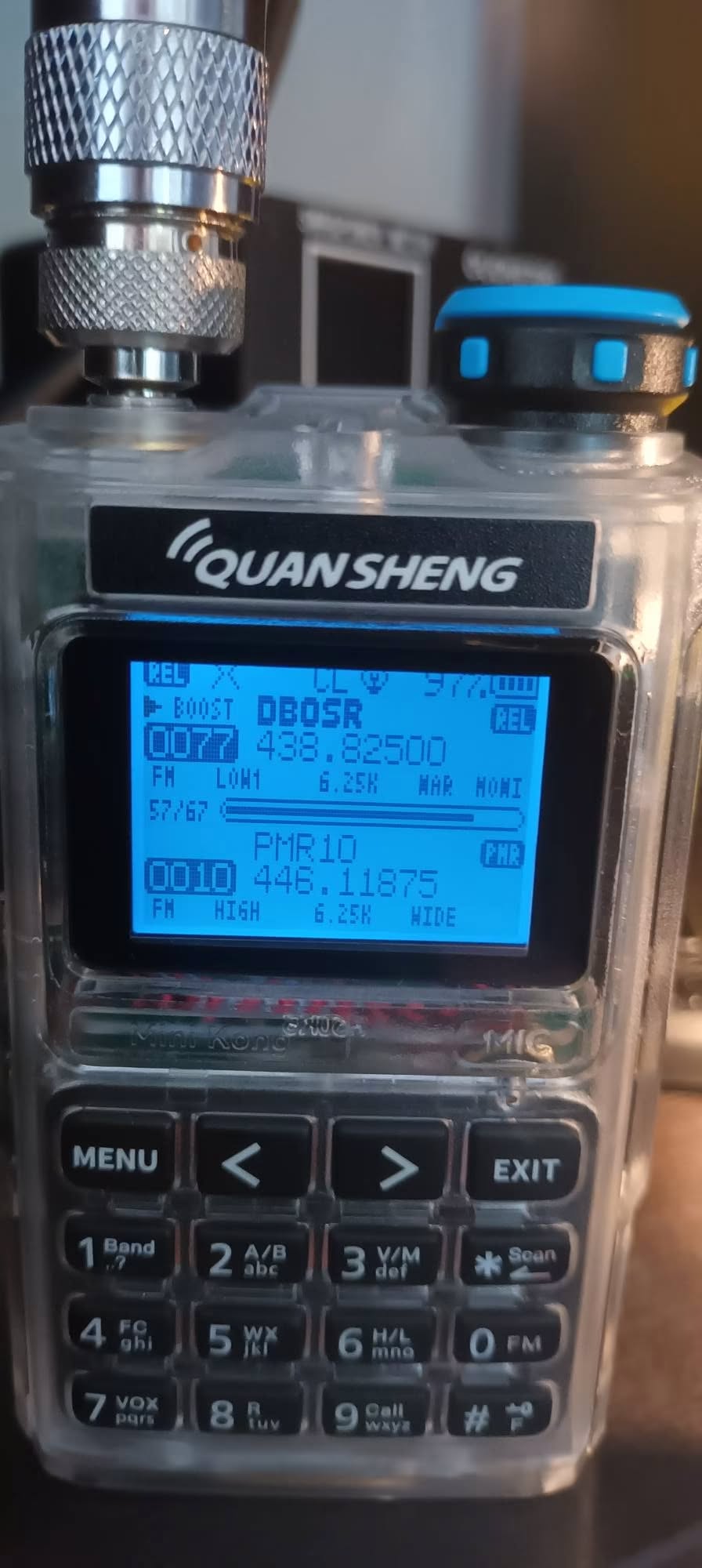
The first thing we noticed was that the UI was improved, but had gone from underwhelming to overwhelming. Above is a picture of the F4HWN fusion UI on a radio. You may notice it's BUSY and just about everything is the same font size. For us it meant at a glance telling exactly what was going on took some pause and process time. When you structure a UI generally, you want some hierarchy to draw eyes to the most important details, ideally conveying critical details right away. The F4HWN UI was missing that.
Fortunately for us we live in the future and AI is a thing! So we grabbed the database, loaded it into Visual studio and worked the problem with CodeX. We came up with the following UI improvement that we've actually submitted to the community for consideration.
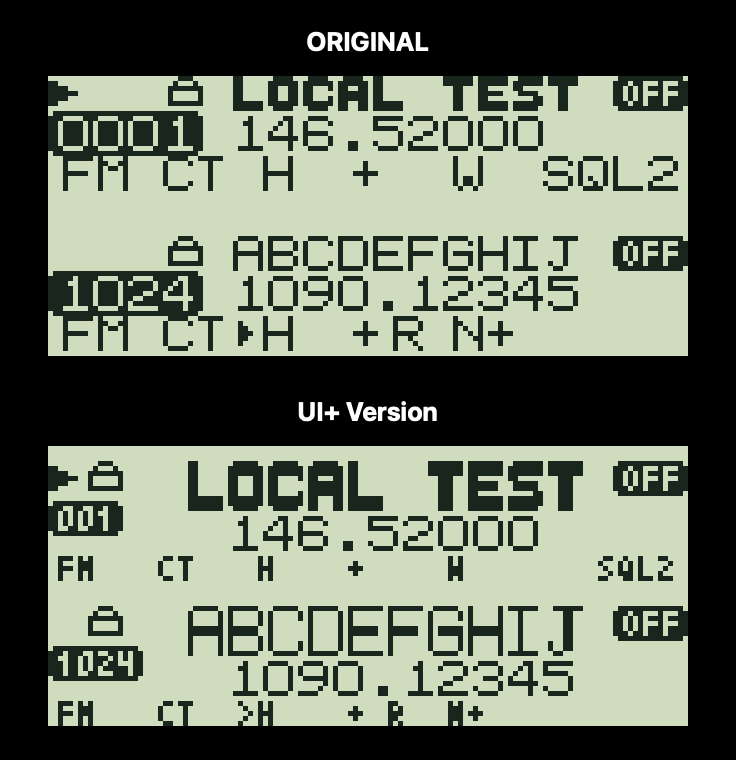
The above picture has the original two channel layout on top, and our revision on the bottom. In the revised layout the channel name is given additional size and priority, making it very obvious what two channels you have up. Below them is the frequency, which is a nice to have detail as well. Then alongside that and below that are some generally nice to have details about your channel settings, but generally you won't be referring to when operating the radio.
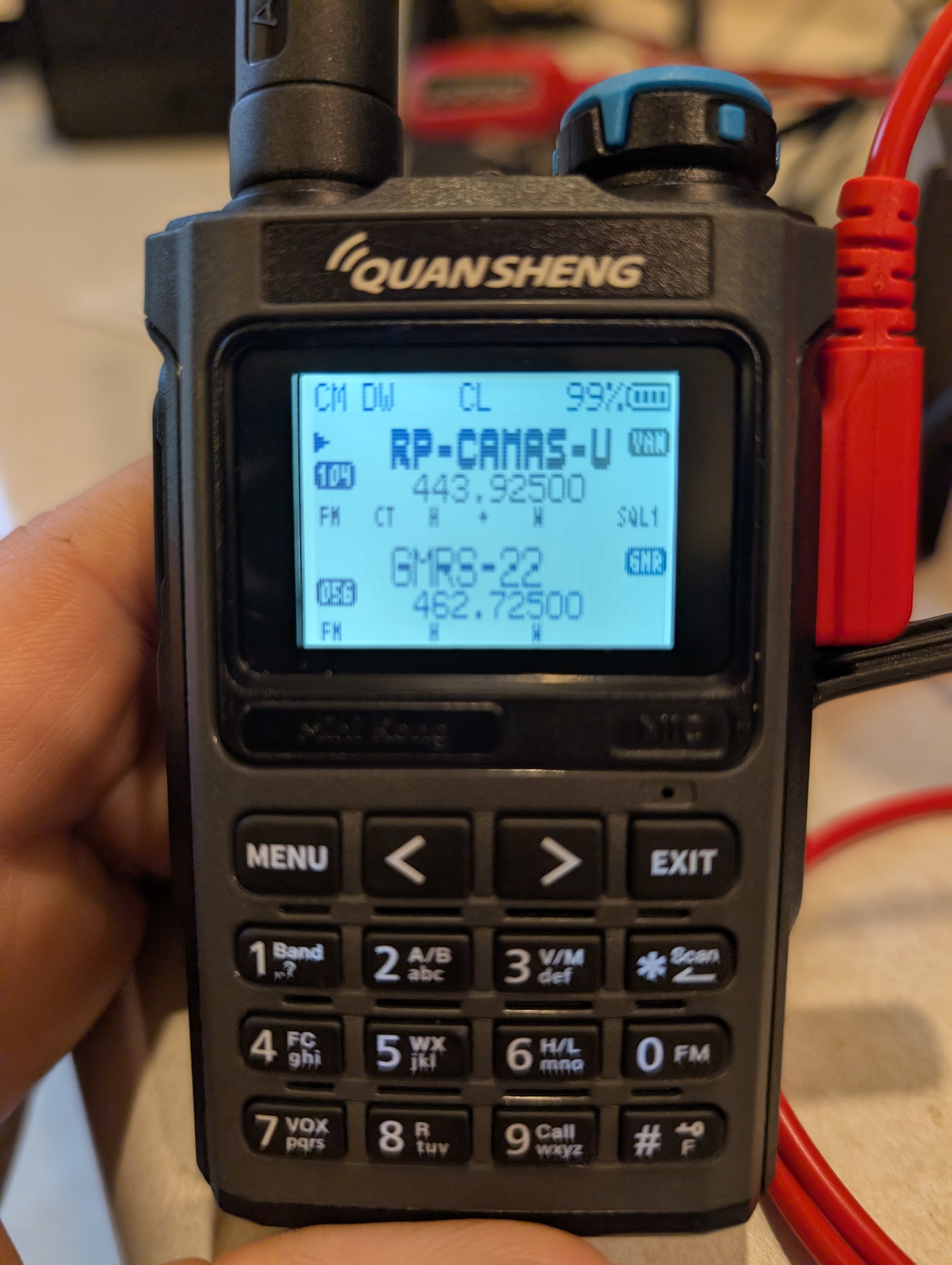
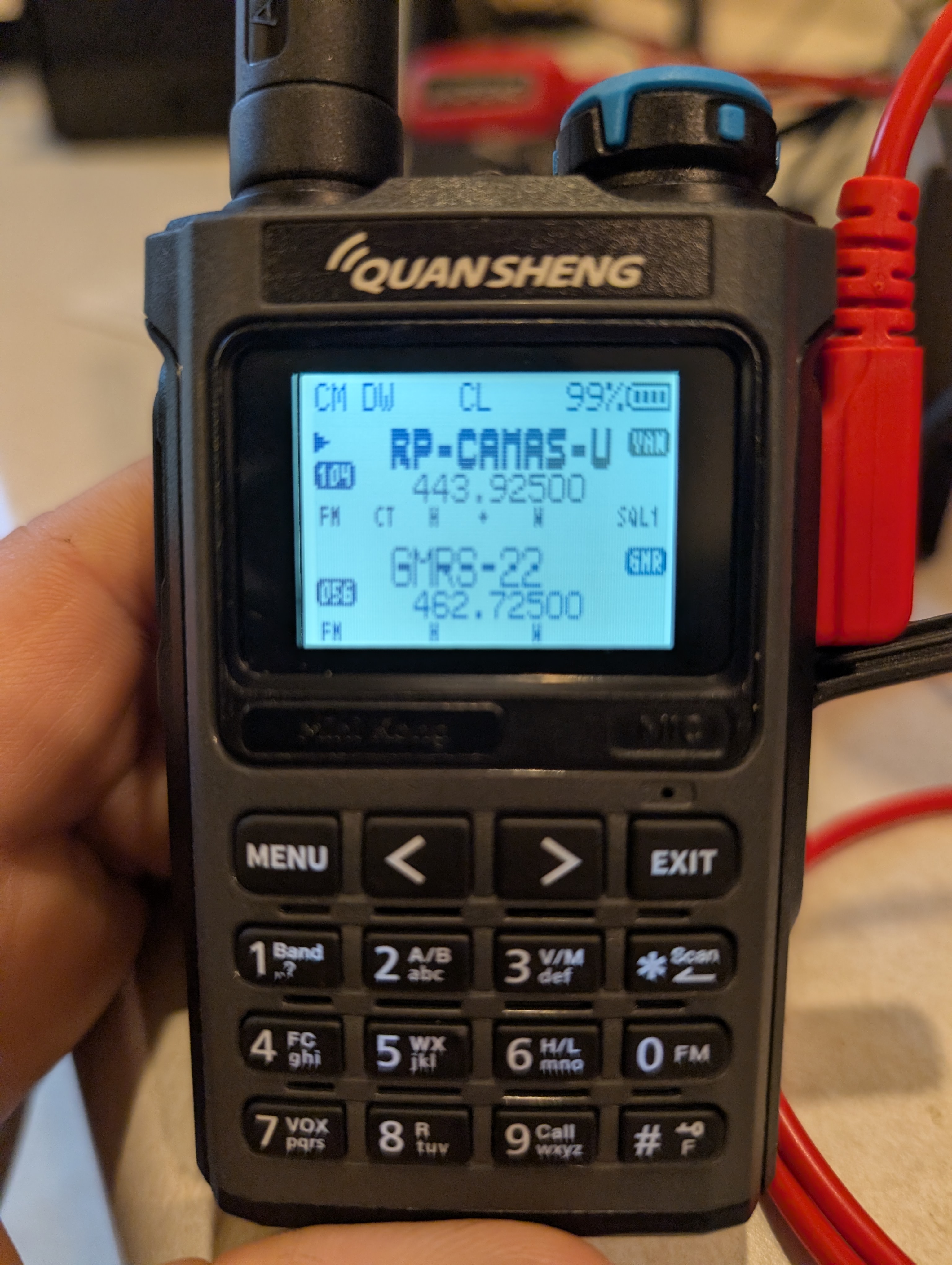
Picture above is how the radio actually looks when held in your hand with the UI+ modification. At a glance the channel names are immediately obvious, and while the other details are not as obvious, you can focus your eyes on them and get the details you need with a bit more effort. Previously everything was equal visual priority, overwhelming you as a user. We found this an improvement for sure.
How Does the Radio Actually Perform?
So we can tell you for a fact this radio is indistinguishable form the Baofeng UV-5R mini on local repeaters. It's the same 5W, out of darn near the same antenna. Nothing exciting to be said there, and it's a boring statement because it simply works and does as it's supposed to. We've had no problem getting into our local nets, making simplex contacts, and even chatting with friends out and about or when helping back up trailers. It's a solid 5w compact radio that does exactly what it's advertised to do.
Now we could quit right there... but that wouldn't be a real radio review though would it? So we're taking this radio where we thing portable radios belong, out and about! Stay tuned for updates to the radio review as we take it out this Fall and Winter season.
Measured Wattage and SWR
Claimed Wattage: 5W
Measuring Device: Inline Surecom SW-102
Notes: We measured first with included antenna, but got high SWR readings we figured were throwing wattage readings off. So we tried a large aftermarket antenna, and got slightly better SWR but same lower than expected power results. Since SWR is a crapshoot on an HT anyways, we just went with a dummy load to capture wattage and confirm it is indeed a 5w radio.
Frequency Band | Wattage | SWR*** |
|---|---|---|
National VHF (146.520 MHz) | 4.82 W | (Dummy load) |
National UHF (446.000 MHz) | 5.01 W | (Dummy load) |
GMRS CH 1 (462.5625) | 4.7w | (Dummy load) |
Accessories we recommend

We've talked about this over the shoulder compact radio holders over on our UV-5R mini review. They continue to work good for taking a radio out with you and wanting to keep your hands free. Infact, we like these so much we bought a bunch extra to stash with our extra radios in various cars. We're huge fans of these, and for the price, you'd do well to get some yourself for the Quansheng UV-K1 radio.

We really like this tactical chest pack for taking the radio on outdoors adventures with us. You can stash cliff bars and other essentials in it, attach a radio to the front with an external mic for ease of communications, and in general just enjoy being able to have comms available to you while being hands free. While the picture above has a handgun in the picture, when we go skiing off piste we primarily fill ours with medical essentials such as tourniquets, splints, and other such things that you might need. If we were going mountain biking somewhere really rural we'd pack a spare tube and some other mild repair supplies as well. Talk about usefl!

This waterproof Mic is both affordable and high quality. The mic has worked exceptionally well for us in any condition. We can also attest for certain that the radio is waterproof and has no issues being utilized on a wet and heavy storm day on Mt. hood. Simply chuck the radio in a zip lock bag and run your comms out to this mic. The only way we were able to get the mic to struggle was if it was packed full of snow... and at that point any mic is going to suffer, so this is a option!

You're going to need a cable to program your radio, probably. We needed one at least as USB-C connection to our Macbook was spotty. Your mileage may vary, and honestly odds are if you're willing to goof around with this radio you're going to want a Baofeng at some point as well anways.
Final Verdict
This is the ultimate radio for the enthusiast with some persistence and a tolerance for modest frustration. When you're done though, you've got the ultimate compact to sub-compact radio, often with features that aren't found until you buy a radio for 10x the price. That makes this radio one heck of a capable bargain!