Specs & Ratings
Bottom Line
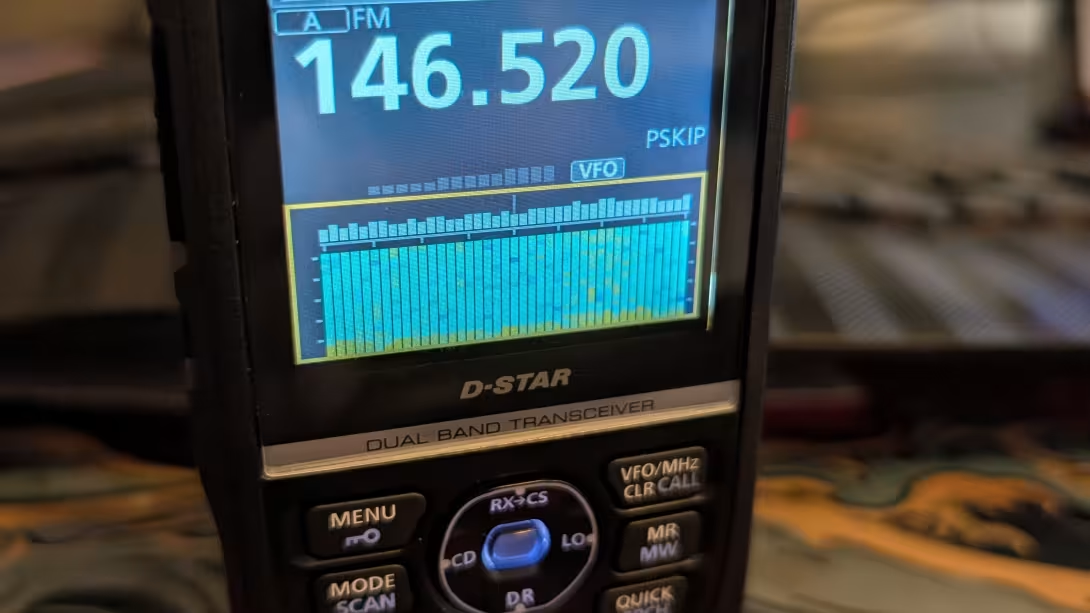
The ICOM ID-52 is an exceptionally capable radio with lots of useful features that make it a strong candidate for a handheld you'll be taking on the road with you to new destinations.
Pros
- Exceptional TX and RX quality.
- Waterfall scope functionality is a fun way to search for nearby activity.
- Nearby repeater search functionality is immediately useful.
- USB-C on the ID-52A Plus.
- Exceptionally fast scanning.
- Temporary skip when scanning is something we can't live without now.
Cons
- Information displayed for Nearby repeater search isn't that useful.
- Lack of touch screen can make navigating challenging
- Combine lack of touch screen with a very limited amount of buttons and you find yourself digging in a lot of menus
- Older ID-52 models lack USB-C.
- Stopping Scanning requires a long button push, which can often take as long to work as the scan resuming, meaning you can miss things, especially if the radio is just out of reach.
Who This Is For
This radio is a standout radio for portable use cases where the weight and size aren't of significant consequence. Think camping somewhere you've never been, or traveling in a car you can't put a mobile unit in. The scope functionality along with the nearby repeater search functionality really let this repeater shine. Still, for a local use handheld like around your property or shop, the excellent TX/RX combined with amazingly fast scanning mean this radio shines just about anywhere you take it.
Testing Notes
We review all handhelds with the focus primarily being on their usefulness in portable situations. Some radios have smaller form factors and do better in "extreme" use cases like skiing or hang gliding. Other radios have large form factors and are portable, but are more meant to move from tabletop to tabletop as you move around. Then there's this radio right in the middle size wise.
Detailed Review
So it's no secret, we love the ICOM-5100 radio and if ICOM can manage to not botch it, we fully expect the ICOM-5200 radio coming out soon to be a perfect 10. So when we spotted the Icom ID-52... we of course knew we had to get our hands on one. Take the amazing functions of the 5100, add in the fourthcoming functionality of the 5200 like waterfall scope... seems like s a slam dunk! Add in that this functionality would be all the more useful in a setup that is that much more portable, well we'd already clicked "buy now" about ten thoughts ago!
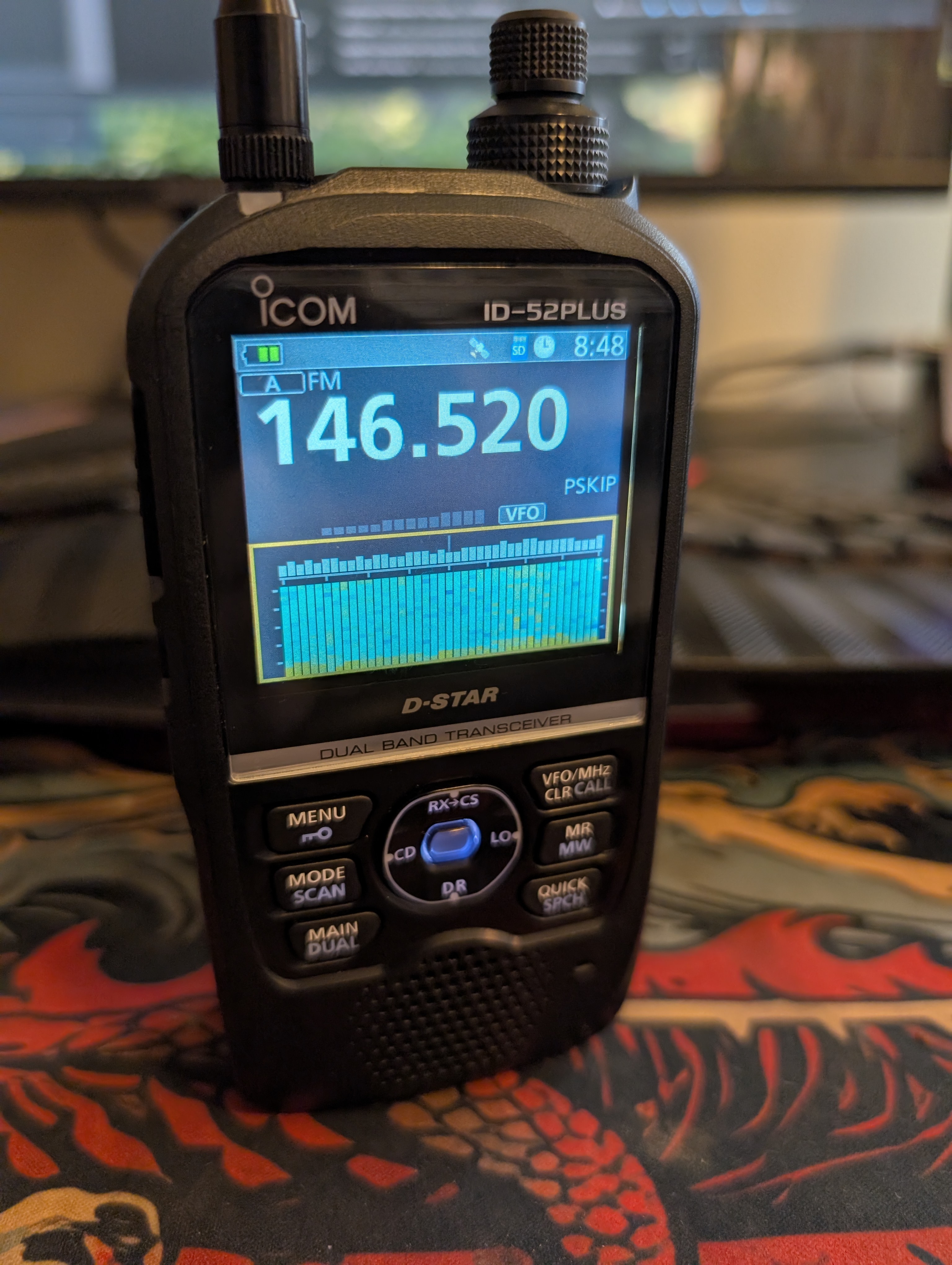
We acquired an ICOM-52A plus off of Ebay, used. The price was right, it included a second high capactiy battery, and given it was a fellow ham we are generally quite trusting. Not sure why the person chose to get rid of it, but the price was a healthy bit below MSRP and since we only do this because we love radios... the savings were essential!
Our initial impressions are that the RX and TX quality of the ICOM-52 is phenomenal. None of our handhelds sound this clean and clear, and we are getting exceptional TX/RX reports, and at that time we hadn't even stepped outside.
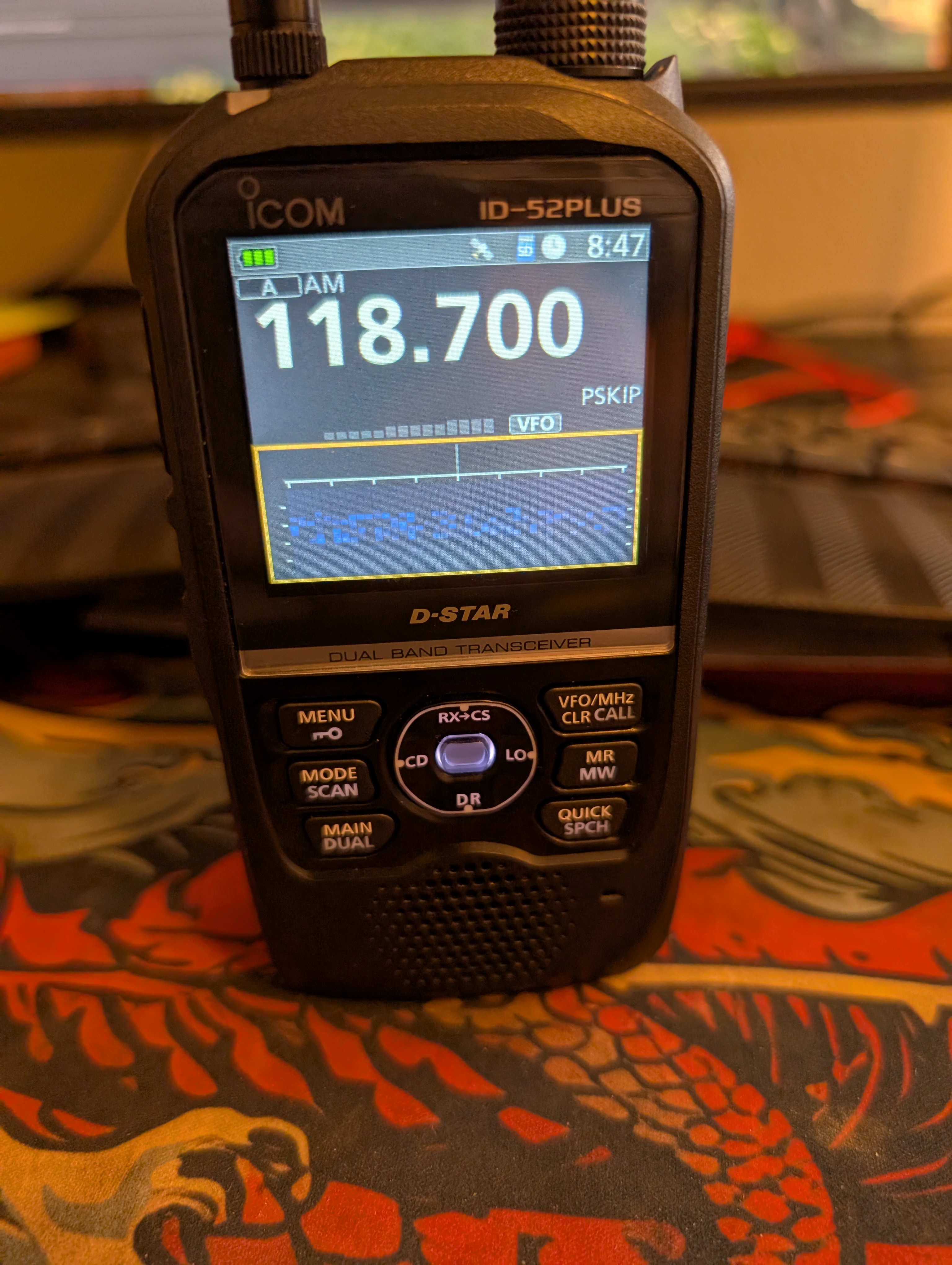
We decided to focus next on testing the Waterfall scope functionality of the radio, and found two immediate uses. First, we went onto airband and listened around while we were waiting for someone we knew to arrive on a plane. Sure enough, we were able to listen in quite clearly and find all of the various frequencies for tower and ground control.
Next up we took the radio out to a race track we were attending an event at. We utilized the scope functionality to locate what frequencies various teams and race control were using, which was a fun feature.
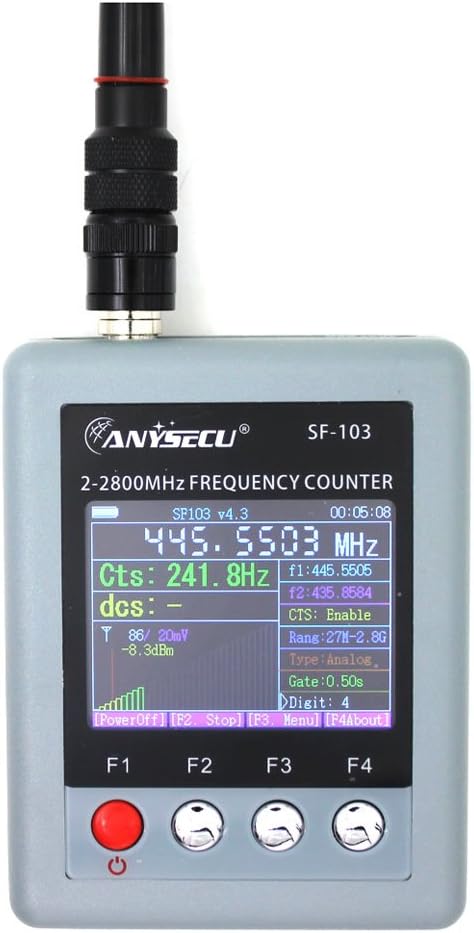
Sure there's other tools to scan around and find frequencies that might be faster, such as the highly regarded Anysecu SF-103 frequency finder. That said, we find cruising around the various frequency ranges with waterfall an engaging and rewarding way to find communications in progress, so score another for the ICOM ID-52.
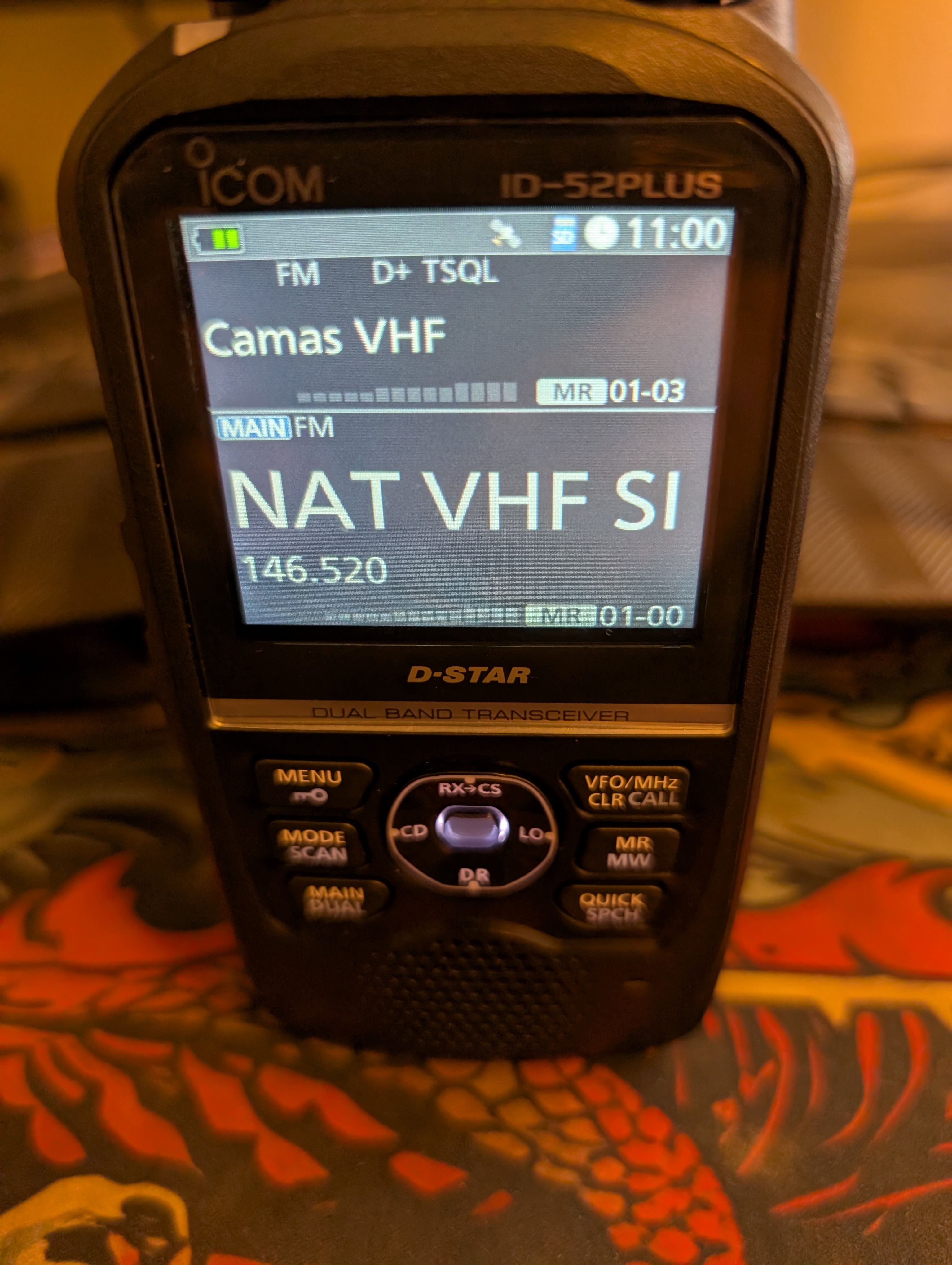
Since the initial testing, we've mostly just been leaving the radio scanning in the background around the shop. We love to help make sure our local repeaters aren't non-responsive to folks reaching out, and the ICOM ID-52 is amazing at this task as it scans LIGHTNING quick. We wanted to make an animated gif to showcase this, but honestly it was just blurry it's so fast at scanning. One thing we noticed is the radio would scan quickly, but ever so momentarily pause on a frequency if there was signal, but resumed scanning near instantly if it didn't find the tone squelch we had programmed for that channel. Pretty slick design, scan fast on signal, check for tone only if signal is present. Clever!
We did have a few minor complains with the radio.
One issue was that the ID-52 has it's own menu structure and button setup that makes it a bit more unique than most radios. You'll come to understand it reasonably quikcly, but you won't pick this radio up and immediately fall in love with it. You'll also spend some time learning your way around, and every so often you'll either discover something new, or discover something you thought you knew wasn't always the case. We think a touchscreen would have really helped users with the radio, but eh it's not unbearable by any means so only knocked a few points off.
Another issue we found is that the form factor is a little interesting. It's not as compact as the Yaseu FT-5DR, but it's not a brick either like many other offerings out there. It's a portable for moderately active activities, but I sure don't see us taking this skiing or recommending it to hang gliders, though this radio is clearly not needed for those sports. Hopefully if you're hand gliding, you know where you'll be and don't wind up in a state you don't normally travel!
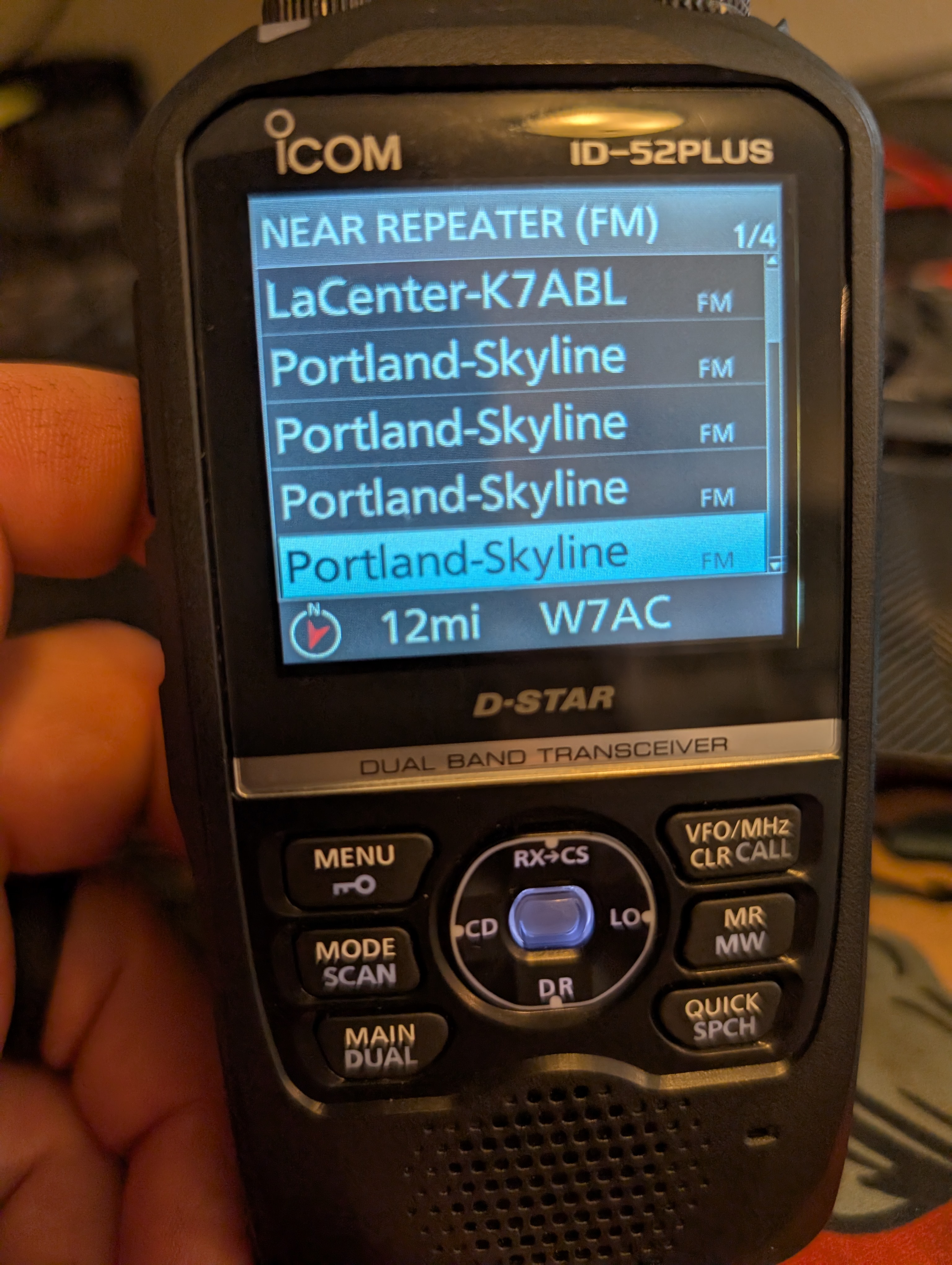
The last issue we ran into is a big one: what the heck is a person supposed to do with this screen when searching for "nearby repeaters". There's 4 with the same name, and two on the next page. How is a user supposed to tell any of them apart or differentiate them? On the ICOM-5100 there's an easy way to differentiate, especially if you utilize values from repeater-scores.app.
Issues aside though, the radio is great, has awesome industry leading features, is awesome to navigate, and it does have one essential feature so many modern handhelds are trying to ignore. It's got USB-C charging if you buy the ID-52A plus! No idea why so many modern radios lack this feature our grandmother has had on her cell phone for 10 years... but such is technology!
Measured Wattage and SWR
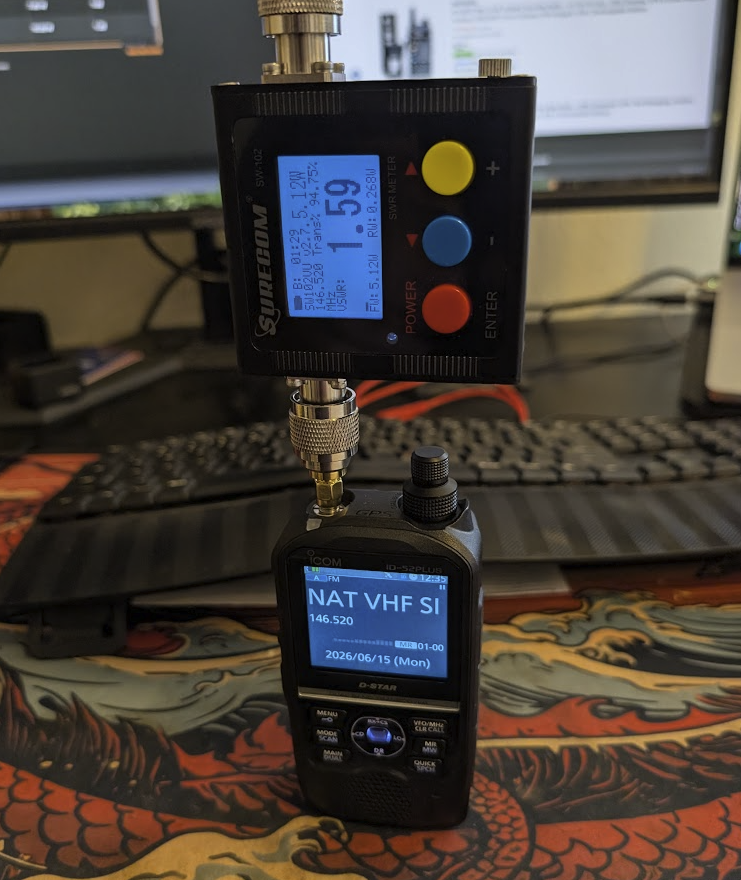
Claimed Wattage: 5W
Measuring Device: Inline Surecom SW-102
| Frequency Band | Wattage | SWR*** |
|---|---|---|
| National VHF (146.520 MHz) | 5.12 W | 1.59 |
| National UHF (446.000 MHz) | 5.81 W | 2.10 |
| GMRS CH 1 (462.5625) | TBD | TBD |
***measuring SWR with an inline device is imperfect, but has some value especially as we test every handheld radio the exact same way.
Final Verdict
This radio is now our staple around the property radio. It scans fast, it's got exceptional TX and RX quality, and it's form factor is pretty reasonable. We expect to take it on dog walks and the like as well. We also expect to take this with us on camping trips or any adventure in a car where we haven't installed a mobile radio setup, such as if we find ourselves shotgun for some reason in our wife's hybrid driving to visit some out of area family.